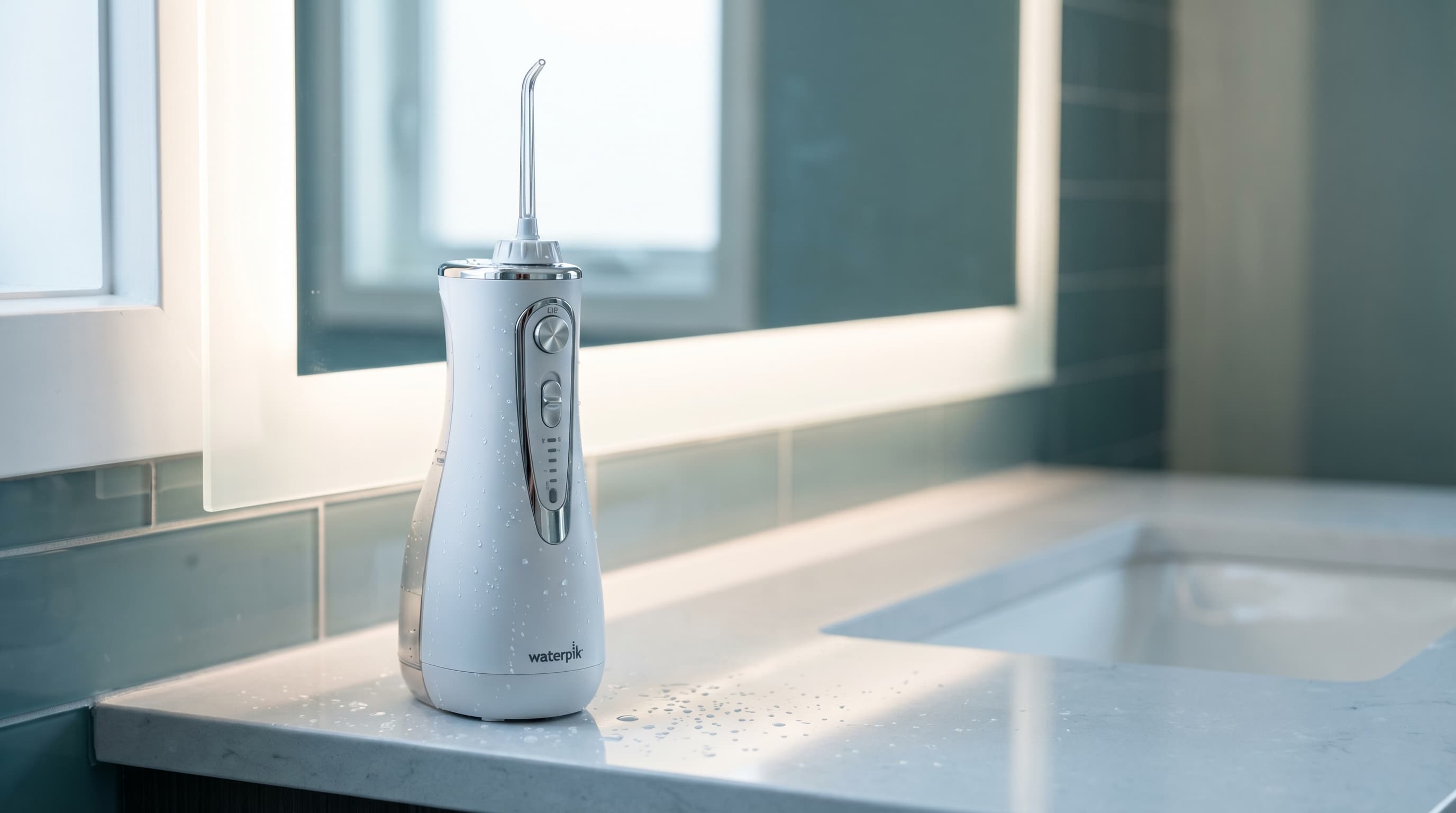
Best Water Flosser 2026
35% of your tooth surface sits between teeth where brushing can't reach. A water flosser blasts away plaque and food debris in those gaps - and it's far easier to stick with than string floss. Here are the best options.
Our Top Picks
Affiliate disclosure: We earn a commission on purchases made through our links, at no extra cost to you.
Water flosser vs string floss: the honest comparison
String floss is technically more effective at scraping plaque off the tight contact points between teeth. But here's the reality: only 30% of Americans floss daily. The best floss is the one you actually use.
Water flossers are clinically proven to reduce gingivitis and bleeding significantly better than string floss in real-world studies - not because they're inherently superior, but because people actually use them consistently. They're also better for braces, implants, bridges, and anyone with dexterity issues.
String floss wins at...
- Tight contact points between teeth
- Portability (fits in a pocket)
- Zero cost barrier
- Scraping calcified plaque
Water flosser wins at...
- Compliance - people actually use it daily
- Below the gumline cleaning
- Braces, implants, and bridges
- Gum health and reducing bleeding
- Speed (60 seconds vs 3-5 minutes)
Our recommendation: use both if you can. Water flosser first (to flush debris), then string floss the tight contacts. But if you'll only do one, a water flosser daily beats string floss never.
Detailed Reviews
#1 Pick

Waterpik Aquarius WP-660
The gold standard. The Aquarius is the most clinically studied water flosser on the market, with ADA acceptance for plaque removal and gingivitis reduction. The 10 pressure settings let you start gentle and work up as your gums adapt.
#2 Pick

Waterpik Cordless Advanced WP-580
The best cordless option for shower use or travel. Waterproof design means you can use it in the shower without mess. The trade-off is a smaller reservoir - you'll need to refill mid-session for a full mouth clean.
#3 Pick

Philips Sonicare Power Flosser 3000
Sonicare's entry into water flossing uses a unique Quad Stream nozzle that sprays in an X-pattern, so you don't need perfect aim. Great for beginners who find traditional water flossers messy.
#4 Pick

Bitvae C2 Water Flosser
Proof that effective water flossing doesn't require a premium price. The Bitvae C2 hits all the functional basics - adjustable pressure, multiple tips, decent reservoir - at a fraction of the Waterpik price.
How to use a water flosser properly
Fill the reservoir with warm water. Cold water can cause sensitivity.
Start at the lowest pressure setting. Increase gradually over 1-2 weeks as your gums adapt.
Lean over the sink and place the tip in your mouth before turning it on.
Aim at the gumline at a 90-degree angle, not directly at the teeth.
Work along the gumline, pausing briefly between each tooth. Outside surfaces first, then inside.
Expect bleeding for the first 1-2 weeks if you have gingivitis. This is normal and will stop as gum health improves.
FAQ
Can a water flosser replace string floss?
For most people, yes. The ADA accepts water flossers as an effective alternative to string floss. If you have very tight contacts between teeth, you may benefit from occasional string flossing in addition.
How often should I water floss?
Once daily, ideally before brushing. This loosens plaque and debris so your toothbrush can clean more effectively.
Is water flossing safe for implants?
Yes - and recommended. Water flossers are gentler on implant surfaces than string floss and more effective at cleaning the peri-implant sulcus (the pocket around the implant).
Why do my gums bleed when I use a water flosser?
Bleeding indicates gum inflammation (gingivitis). This is normal when you first start and typically stops within 1-2 weeks of daily use. If bleeding persists beyond 2 weeks, see your dentist.
Countertop vs cordless - which is better?
Countertop models have larger reservoirs (90+ seconds of continuous use) and more pressure settings. Cordless models are better for shower use and travel. If you have counter space, go countertop for the best experience.
Check if your flossing routine is working
Your Grin Score measures gum health and plaque levels - the two things flossing directly improves. Track your progress.
Score My Grin - Free