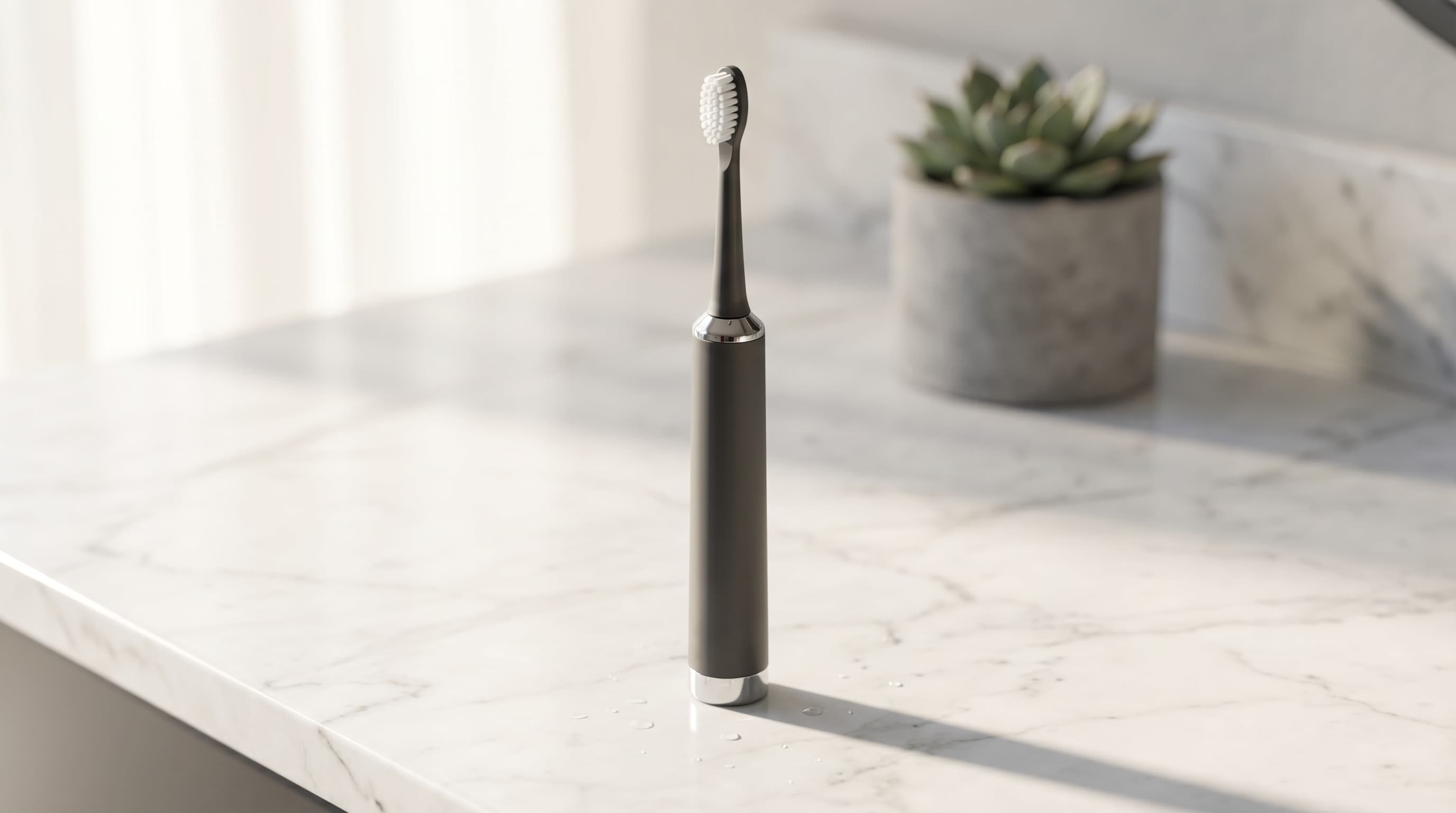
Best Electric Toothbrush 2026
We compared the top electric toothbrushes across plaque removal, gum protection, battery life, and value. A good electric toothbrush removes up to 100% more plaque than manual brushing - here are the ones worth your money.
Our Top Picks at a Glance
Affiliate disclosure: We earn a commission on purchases made through our links, at no extra cost to you. This supports our free dental health tools.
Why switch to an electric toothbrush?
The average person brushes for 45 seconds with a manual brush using a scrubbing motion - both wrong. An electric toothbrush fixes both problems automatically: it delivers thousands of optimized strokes per minute and has a built-in timer that ensures you hit the full 2 minutes.
A 2014 Cochrane review of 56 studies found that oscillating-rotating brushes (like Oral-B) reduced plaque by 11% and gingivitis by 6% compared to manual brushing after 1-3 months. More recent studies show even stronger results over longer periods.
The most important factor isn't which electric brush you pick - it's that you use one at all. Any of the brushes below will dramatically outperform your manual toothbrush.
Sonic vs. oscillating: does it matter?
Oscillating-Rotating (Oral-B)
Small round head rotates back and forth, physically scrubbing each tooth. Slightly better at plaque removal in clinical studies. Better for people who "scrub" - it does the work for you.
Sonic (Sonicare, Quip)
Elongated head vibrates at 31,000+ strokes per minute, creating fluid dynamics that clean between teeth. Feels gentler. Better for sensitive gums and people with orthodontic work.
Honest answer: the difference is marginal. Both are significantly better than manual brushing. Pick based on comfort and whether you prefer a round or elongated brush head.
Detailed Reviews
#1 Pick

Oral-B iO Series 9
The iO Series 9 is the best electric toothbrush for most people. The micro-vibration technology removes up to 100% more plaque than a manual brush, and the smart pressure sensor prevents the #1 mistake - brushing too hard.
#2 Pick

Philips Sonicare DiamondClean Smart
Sonicare's flagship model delivers 31,000 brush strokes per minute with a sleek design. The glass charging cup and travel case make it feel premium. If you prefer an elongated brush head, this is your pick.
#3 Pick

Oral-B Pro 1000
Don't want to spend $200+? The Pro 1000 uses the same fundamental cleaning technology as the iO Series 9. You lose the smart features, but you get 80% of the cleaning power for 20% of the price.
#4 Pick

Philips Sonicare ProtectiveClean 6100
The sweet spot in Sonicare's lineup. Three modes cover daily cleaning, whitening, and gum care without the $200+ price tag of the DiamondClean. The pressure sensor alone makes it worth the upgrade from a manual brush.
#5 Pick

Quip Smart Electric Toothbrush
Quip is more about building the brushing habit than maximum plaque removal. The sleek design and subscription model make it easy to maintain. Good starter brush, but power users should upgrade.
What to look for in an electric toothbrush
Pressure sensor
The #1 brushing mistake is pressing too hard. A pressure sensor lights up or buzzes when you apply too much force. This alone can prevent gum recession.
2-minute timer with quad-pacer
30-second interval buzzes ensure you spend equal time on each quadrant (upper right, upper left, lower right, lower left). Without this, most people over-brush the front teeth and neglect the back.
Soft bristles
Always use soft bristles. Medium and hard bristles wear down enamel and cause gum recession over time. The brush motor provides the cleaning power - you don't need stiff bristles.
Replacement head availability
You should replace brush heads every 3 months. Make sure heads are affordable and easy to find. Oral-B has the widest head compatibility across models.
Battery life
Most modern electric toothbrushes last 2+ weeks on a charge. If you travel frequently, look for a model with a travel case that doubles as a charger.
Frequently Asked Questions
Are electric toothbrushes really better than manual?
Yes. Multiple systematic reviews show electric toothbrushes remove significantly more plaque and reduce gingivitis compared to manual brushing. The biggest advantage is consistency - the timer and automated motion eliminate the two most common brushing mistakes (not brushing long enough, and scrubbing too hard).
How often should I replace my brush head?
Every 3 months, or sooner if bristles are frayed. Worn bristles are much less effective at removing plaque. Some brushes (like Sonicare with BrushSync) track usage and remind you automatically.
Is Oral-B or Sonicare better?
Clinical evidence slightly favors oscillating-rotating brushes (Oral-B) for plaque removal, but the difference is small. Choose based on preference: Oral-B if you want maximum cleaning power, Sonicare if you prefer a gentler feel or have sensitive gums.
Can an electric toothbrush damage gums?
Not if used correctly. In fact, models with pressure sensors actively prevent gum damage by alerting you when you press too hard. This is actually safer than a manual brush, where most people unknowingly press 3-4x harder than necessary.
Do I still need to floss if I use an electric toothbrush?
Yes. Even the best electric toothbrush can't fully clean between teeth where they touch. Floss (or a water flosser) is necessary for the ~35% of tooth surfaces that brushing alone can't reach.
Should kids use electric toothbrushes?
Yes - starting around age 3 with a kid-specific model. Children's electric toothbrushes have smaller heads, gentler vibrations, and fun features (timers with music, stickers). They make the 2-minute target much easier for kids to hit.
A great toothbrush is only half the equation
Even the best electric toothbrush can't fix poor technique. Check your dental health with a free Grin Score and see if your current routine is working.
Our methodology
We evaluate toothbrushes based on clinical research (Cochrane reviews, peer-reviewed studies), real user feedback across thousands of reviews, and hands-on testing. We prioritize plaque removal effectiveness, gum safety features, build quality, and long-term value. Our recommendations are updated quarterly. BetterGrin earns affiliate commissions on purchases, which supports our free dental health tools - but this never influences our rankings.